
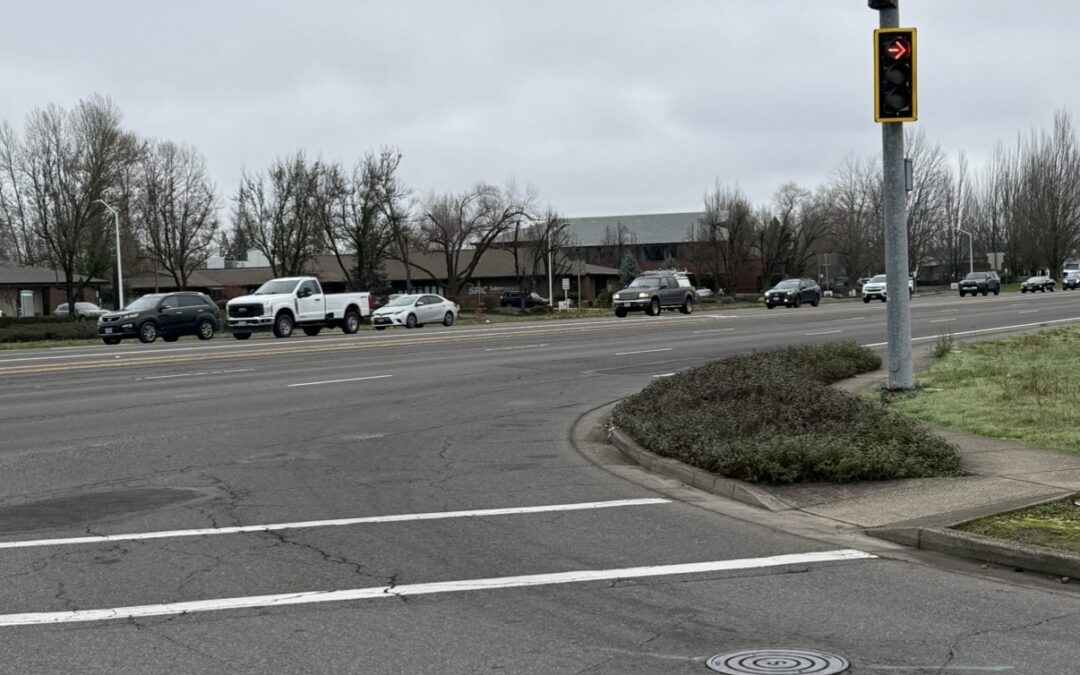
We Shouldn’t Be “Thinking” About the Laws at Intersections
Intersections are one of the most dangerous places to drive. Not because drivers do not care, but because intersections can already be confusing.
There are multiple directions of traffic, different signs or signals, pedestrians, bicyclists, and sometimes limited visibility. Adding extra thinking about the rules on top of all of that can make things worse.
As we approach an intersection, our brain should not be asking,
“Who has to yield to who here?”
That part should already be automatic.
Our attention should be on what is happening around us: watching other drivers, noticing pedestrians and bicyclists, and being ready for someone to make a mistake so we can protect ourselves.
What I See During Driving Lessons
I recently worked with a student who had already taken his drive test twice and did not pass.
During his lesson, as we were driving through different types of intersections, I started quizzing him in real time. I asked what kind of intersection we were approaching and who had the right of way.
He struggled to identify them, and could not explain who needed to yield to whom at most intersection types.
This is actually very common. Many drivers, new and experienced, have driven through these situations hundreds of times without fully understanding how they work. When that understanding is missing, hesitation shows up behind the wheel.
Why This Matters at Intersections
When you approach an intersection, there is already a lot happening.
- Other vehicles and their speed
- Pedestrians stepping off the curb
- Bicyclists crossing or riding alongside traffic
- Drivers who roll stop signs or take turns out of order
If you are also trying to recall the rule for that specific intersection, it becomes harder to focus on everything else. That is when drivers miss important details or feel rushed to make a decision.
Intersections are unforgiving. Roughly 50% of injury crashes occur at intersections.
Knowing right of way ahead of time allows you to stay calm, predictable, and aware.
The Permit Test Is Meant to Build a Foundation
The permit test is often seen as a hurdle to get past, but it is really meant to lay the groundwork for safe driving later on.
This is the time when drivers are introduced to the rules of the road before they are expected to apply them in real traffic. When those rules are learned with understanding, not just memorization, driving becomes smoother and less stressful.
It is normal not to get everything perfect right away. What matters is building that knowledge early so it can become second nature over time.
How Driving Lessons Help With This
One of the biggest benefits of professional driving lessons is connecting the rules to real situations.
Instead of learning right of way only from a book, students see it, talk through it, and practice it as it happens. Over time, those decisions start to feel automatic.
When that happens, students are no longer focused on remembering rules. They are focused on observing traffic, anticipating risks, and driving confidently.
Automatic Knowledge Leads to Safer Decisions
Safe driving is not about recalling rules under pressure. It is about knowing them well enough that you can focus on the road and the people around you.
At intersections, that makes all the difference.
If you are a parent, this is one of the most important concepts to reinforce before and during practice drives. If you are a new driver, do not rush past this stage. The time you spend truly learning intersection rules now pays off every single time you approach one.